5 Diwali Traditions Everyone Should Know
Whether you are celebrating Diwali for the first time or simply want to understand what your friends and colleagues are celebrating, knowing these five traditions will give you a meaningful connection to the festival of lights.
1. Lighting Diyas and Candles
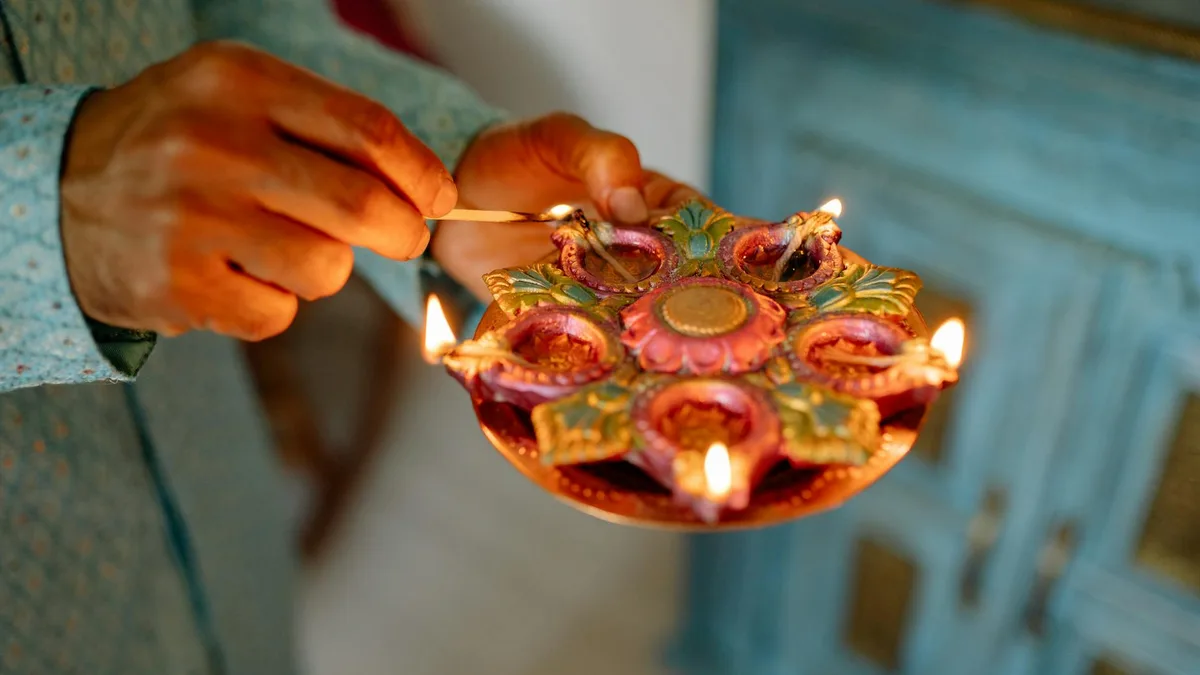
The most iconic Diwali tradition is the lighting of diyas — small clay oil lamps. Rows of diyas are placed along windowsills, doorsteps, courtyards, and rooftops. The light symbolizes the triumph of good over evil and is believed to guide Goddess Lakshmi into the home.
In modern celebrations, electric fairy lights and decorative candles are also used, but many families still prefer the warm, flickering glow of traditional oil lamps. There is something deeply calming about a row of diyas illuminating a dark evening.
2. Creating Rangoli
Rangoli is the art of creating colorful patterns on the floor, typically at the entrance of a home. Using colored powders, flower petals, rice, or even sand, families create intricate geometric or floral designs to welcome guests and deities.
Each region of India has its own rangoli style. In Maharashtra, you might see white powder designs called "rangavalli," while in Tamil Nadu, "kolam" patterns made with rice flour are common. The creativity and effort that goes into rangoli is truly remarkable.
3. Lakshmi Puja
On the main night of Diwali, families gather to perform Lakshmi Puja — a prayer ceremony honoring Goddess Lakshmi, the deity of wealth and prosperity. The puja typically involves placing idols or images of Lakshmi and Ganesha on a decorated platform, offering flowers, sweets, and coins, and chanting prayers.
Many families also clean their account books and start fresh financial records on this day, seeking blessings for a prosperous year ahead. In business communities, Diwali often marks the beginning of a new financial year.
4. Exchanging Sweets and Gifts
No Diwali celebration is complete without mithai — Indian sweets. Families prepare or purchase boxes of sweets like barfi, gulab jamun, laddu, and kaju katli to share with relatives, friends, and neighbors. The exchange of sweets symbolizes sharing sweetness and joy.
Gift-giving has also become a significant part of modern Diwali celebrations. Dry fruits, chocolates, home decor items, and even electronic gadgets are popular choices. Many companies also send Diwali gifts to employees and clients as a token of appreciation.
5. Wearing New Clothes
Diwali is a time for fresh starts, and wearing new clothes is a cherished tradition. Families shop for new outfits weeks before the festival — traditional Indian wear like sarees, kurtas, and lehengas are especially popular.
Children eagerly look forward to showing off their new clothes, and the whole family dresses up for the evening puja and celebrations. The tradition symbolizes renewal and the shedding of the old to welcome the new.
Bonus: Firecrackers and the Shift to Green Diwali
Firecrackers have traditionally been a part of Diwali, with families and communities lighting them to celebrate. However, growing environmental awareness has led to a significant shift towards eco-friendly celebrations. Many families now choose sparklers over loud crackers, and some skip them entirely in favor of laser light shows or community bonfires.
The "Green Diwali" movement encourages organic rangoli colors, reusable decorations, and minimal waste — proving that celebrations can be just as joyful while being kind to the planet.